

MTN Pan African MIP could mark new beginning for African journalism – TAEF Vice-President


The MTN Pan African Media Innovation Programme at the University of Johannesburg has been described as a learning programme with the potential to begin a new chapter in how African journalism is practiced.
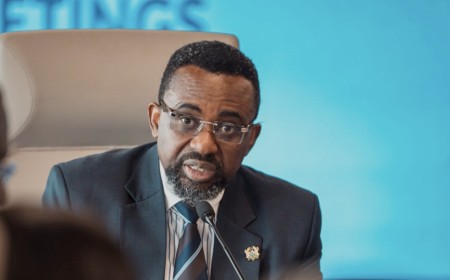
Speaking during the virtual induction of the first cohort of the continental programme hosted by the University of Johannesburg in collaboration with The African Editors Forum (TAEF), and funded by MTN Group, the Vice-President of TAEF, Emmanuel K Dogbevi reminded the Fellows that having been selected for the programme, puts them at the cusp of a crucial moment in the annals of African journalism, “and how this moment is impacted with your active participation could determine the next chapter of journalism in Africa,” he said.
Dogbevi acknowledged that times are hard for journalism across the world. “The shrinking of democratic systems, the rise in attacks on press freedom, and the revolution in technology, all conspire against journalism in many ways than could be imagined, but they also present opportunities – opportunities that journalists who are aware and conscious of their responsibilities can take advantage of and turn positive.”
He also urged the Fellows to immerse themselves in the programme. “Make it look like your life depends on it. Ask questions. Curiosity isn’t a weakness; journalism is anchored on it. This programme is meant to make you better. Make it matter,” he said.
Dogbevi called on the Fellows to work together with each other. He told them to be part of the team.
“No one succeeds alone here, and no one is expected to. Lean on your colleagues. Offer help when you can give it, and ask for it when you need it. We’re genuinely glad you’re here. The work ahead matters, its arduous, but must be done. Africa needs us. Africa needs impactful journalism now more than ever— you have the chance to learn to do it more effectively. Hold yourselves accountable to the facts, and as you do, serve the people, and uphold the standards,” he said.
On his part Professor Chad Harris, the Vice Dean for Teaching and Learning at the University of Johannesburg, expressing his excitement that the project had come to fruition gave a background to the programme, and commended his colleagues who worked hard and did all the right things to make it happen.
“I remember initial talks with people from the department who were telling me about the potential for this amazing short learning programme (SLP) called Pan African Media Innovation, and our advice to departments who are proposing a short learning programme is: we say, look, it sounds like a good idea, but go and do your homework.
Make sure it’s feasible for you. Make sure you have the expertise, but also make sure there’s a market. Make sure it’s viable. Make sure it’s responding to a felt need. And most important of all, speak to your industry partners to make sure that they will be on board and they will support you,” he said.
Prof Harris said the feedback from the department from the get go was that all of those things were in place.
“All of those things are definitely satisfied when it comes to this particular SLP, and based on the evidence I’m seeing today, they were right all along, and so they must be congratulated for their foresight, for their hard work, and for the network they set up to enable this short learning programme to happen today,” he said.
A former journalist himself, Prof Harris noted that a lot has been written about disruption brought about by technology, not just in media, but in all industries, all sorts of professions.
“And what is consensus view is that one of the ways of protecting yourself against that disruption is to make sure that your learning is lifelong, so we don’t have a set and forget approach to accreditation and learning and certification anymore, but one that’s more geared towards lifelong learning through the use of short learning programmes and micro credentials,” he said.
Mr Dominic Kumalo, the Chief of Staff to the Chairman of MTN Group who welcomed the Fellows from South Africa, Nigeria, Rwanda, Eswatini, Ghana, Cote d’Ivoire, Cameroon, South Sudan, Zambia, and Benin, said MTN ensures that the business is connected to the markets that it operates in. “We ensure that at least we connect with the communities that we are working with, and particularly ensure that we work with the journalists and media professionals across our market, maybe if I can preamble by stating that the media innovation programme was first conceptualised in 2022 by MTN Nigeria,” he said.
He said MTN Nigeria saw that in an evolving landscape in the digital world, at least, the media professionals needed to start being capacitated at least within the scope of their business. He said in that regard, MTN Nigeria decided to partner with the media industry to ensure that they capacitate the media professionals there.
“Three years after, our CEO here at the group, Mr. Ralph Mupita, said that the MTN Media Innovation has been successful in Nigeria. We need to ensure that we scale it up across all our markets, hence we came up with the Pan African Media Innovation Programme in partnership with the University of Johannesburg and the African Editors Forum. In a simple nutshell, you know, as MTN, we do whatever we can to ensure that the partners we work with, the people that we train, you know, it’s not just an event, but we’re seeing this programme evolving over time,” he said.
The six-week online programme will equip the Fellows with future-oriented knowledge and practical skills essential for thriving in the era of the Fourth Industrial Revolution. It addresses the core topics such as digital transformation, technological advancements, media sustainability, audience engagement and monetisation, media entrepreneurship, digital media ethics and law, and Pan-African storytelling, by offering a dynamic and multidisciplinary learning experience.
The Fellows will develop capacities to drive innovation, adapt to digital disruption, foster sustainable media enterprises, and harness technology for creative and ethical media practice in the digital economy.
The programme is tailored for professionals seeking to position themselves for career advancement, leadership roles, and new opportunities within the rapidly changing African and global media landscapes.
“By strengthening competencies in digital strategy, enterprise development, and ethical communication, the programme provides a foundation for employment progression and further study in media innovation and related fields,” the University of Johannesburg says.
By Peter Mensah
Source: ghanabusinessnews.com
What's Your Reaction?
 Like
0
Like
0
 Dislike
0
Dislike
0
 Love
0
Love
0
 Funny
0
Funny
0
 Wow
0
Wow
0
 Sad
0
Sad
0
 Angry
0
Angry
0










Comments (0)