

Tupac Murder: Keffe D Sentenced to 40 Years in Prison
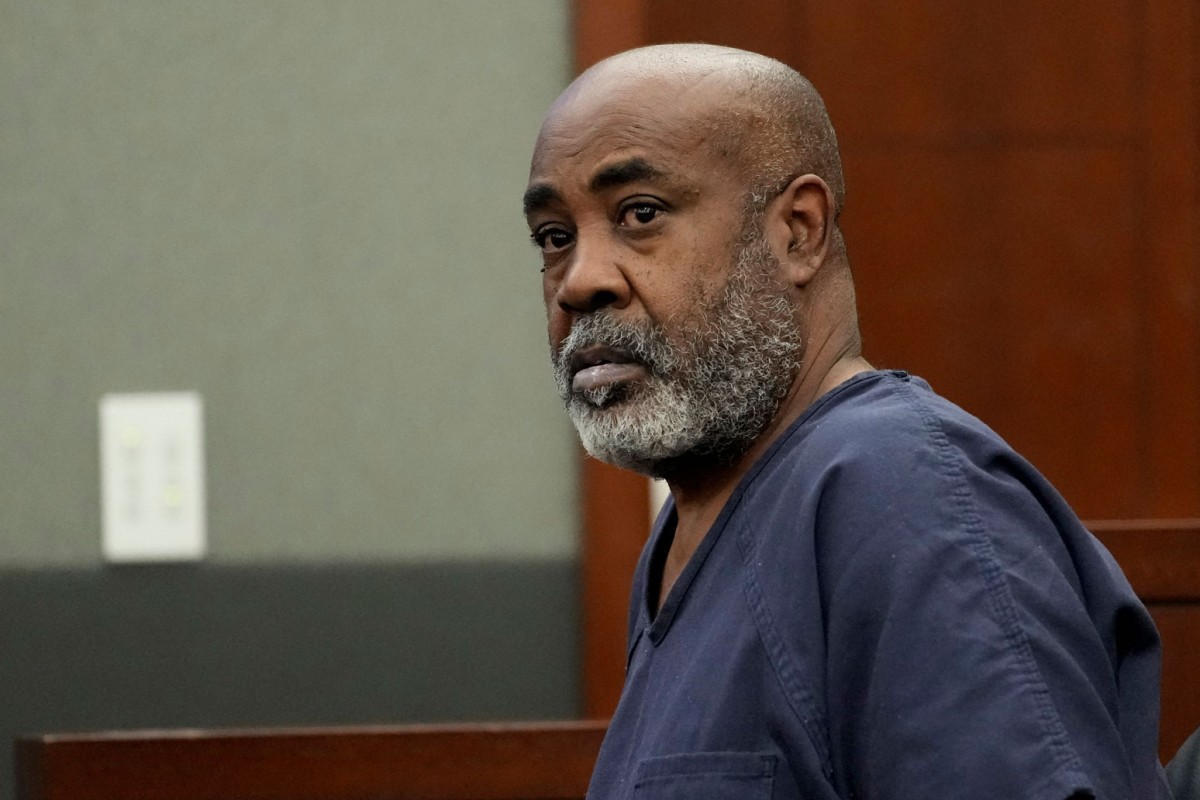
Nearly 30 years after the killing of hip-hop legend Tupac Shakur, Duane “Keffe D” Davis has reportedly been sentenced to 40 years in prison following his conviction for first-degree murder
Tupac Murder: Keffe D Sentenced to 40 Years in Prison
Nearly three decades after Tupac Shakur was killed in Las Vegas, Duane “Keffe D” Davis has been sentenced to 40 years in prison following his conviction for the rapper’s murder.
Duane “Keffe D” Davis, the only person charged in connection with the 1996 killing of American rap legend Tupac Shakur, has been sentenced to 40 years in prison following his conviction for first-degree murder.
A Las Vegas court handed down the sentence on Tuesday, bringing a significant development in a case that has remained one of the most closely followed unsolved mysteries in hip-hop history for nearly three decades.
The jury reportedly delivered its verdict on August 31, 2026, after deliberating for less than three hours.
Davis, a former leader of the Southside Compton Crips gang, was accused of organising the attack that claimed Shakur’s life following an altercation involving members of the rapper’s entourage and Davis’s nephew, Orlando Anderson, earlier that night.
Judge: 'You Don't Get to Take a Man From His Family'
During sentencing, Judge Carli Kierny emphasised the devastating consequences of Shakur’s killing, telling Davis that he had deprived the rapper’s family of a future with him.
“You don’t get to take a man from his family,” the judge said. “You don’t get to take his very life, his whole future from him, and just walk away from it. Especially when that man is Tupac Shakur.”
The judge also reflected on the lengthy wait for justice in the case.
“Took us 30 years, but at this time, you are going to face justice for what you did on September 7, 1996,” Kierny said.
Davis was credited with 731 days already spent in custody.
How Tupac Shakur Was Killed
Shakur was shot on September 7, 1996, while travelling in a car with Marion “Suge” Knight near the Las Vegas Strip.
The attack followed an altercation at the MGM Grand hotel earlier that evening involving Shakur’s entourage and Orlando Anderson.
Gunmen opened fire on the vehicle, striking Shakur four times.
The rapper, who was just 25 years old, succumbed to his injuries on September 13, 1996, six days after the shooting.
Prosecutors alleged that Davis orchestrated the killing in retaliation for the earlier confrontation involving Anderson.
Although prosecutors maintained that Davis organised the attack, they did not allege that he personally pulled the trigger.
The killing shocked the music industry and robbed hip-hop of one of its most influential and controversial voices at the height of his career.
Tupac's Family Recounts Three Decades of Pain
During the sentencing proceedings, members of Shakur’s family described the lasting emotional and psychological consequences of his death.
His sister, Sekyiwa Shakur, told the court that losing her brother had profoundly affected the family.
“The loss of Tupac, for a long time, crippled my entire family, emotionally and mentally,” she said.
She added: “I spent 30 years without my protection.”
Shakur’s stepbrother, Maurice “Mopreme” Shakur, also spoke about the magnitude of the loss, noting that the rapper never had the opportunity to raise children or watch his nieces and nephews grow up.
The family’s statements highlighted the personal cost of a killing that remained unresolved for decades and continued to generate public interest across generations of music fans.
Statements and Memoir Helped Investigators Build Their Case
Investigators reportedly built their case against Davis partly on statements he made in interviews, documentaries and a 2019 memoir in which he discussed events surrounding Shakur’s killing.
Those accounts became significant elements of the investigation into the shooting and the events that preceded it.
For years, the case attracted widespread speculation, with investigators, journalists and fans examining possible motives, gang rivalries and the circumstances surrounding the attack.
Davis’s prosecution marked a major development in the long-running investigation.
His conviction and sentence now represent a significant legal milestone in a case that has remained part of hip-hop history for almost 30 years.
A Case That Defined an Era in Hip-Hop
Tupac Shakur remains one of the most influential figures in rap music, remembered for his lyrical talent, social commentary and portrayal of violence, inequality and life in disadvantaged communities.
His death, at just 25, became one of the defining tragedies in hip-hop, particularly amid the tensions and rivalries that characterised the American rap scene during the 1990s.
The killing also became intertwined with the era’s wider East Coast-West Coast hip-hop rivalry, although the circumstances of the shooting involved specific personal and gang-related tensions.
Nearly three decades later, the case continues to resonate with fans and the music industry.
The sentencing of Davis marks a major development in the pursuit of justice for Shakur, whose death left a lasting impact on his family, the hip-hop community and generations of music lovers.
What's Your Reaction?
 Like
0
Like
0
 Dislike
0
Dislike
0
 Love
0
Love
0
 Funny
0
Funny
0
 Wow
0
Wow
0
 Sad
0
Sad
0
 Angry
0
Angry
0

Editor




Comments (0)